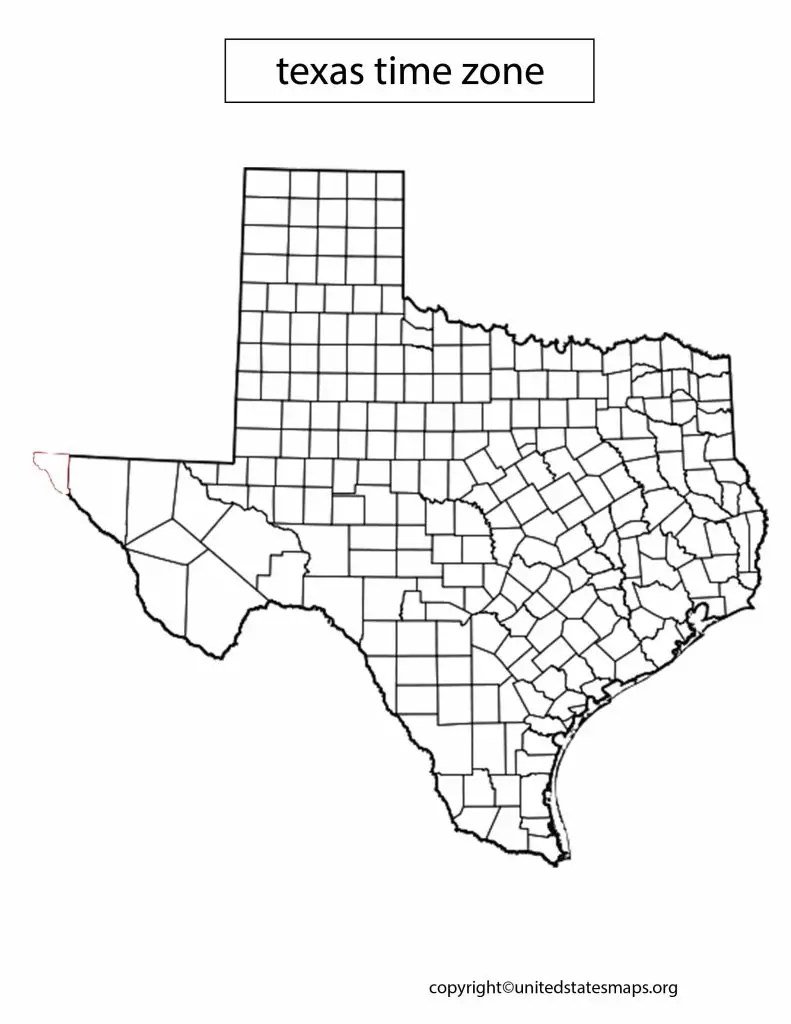
Texas, a land of sprawling ranches, bustling metropolises, and vast, untamed landscapes, is a state defined by its sheer scale. But beyond its impressive physical dimensions lies a fascinating nuance often overlooked: its time zones. Understanding the History and Geography of Texas Time Zones isn't just a matter of setting your clock; it's about appreciating the forces that shaped the modern world, the practicalities of a diverse geography, and the daily rhythm of millions. For anyone traveling across the Lone Star State or simply seeking to grasp its temporal intricacies, this guide unpacks everything you need to know.
At a Glance: Texas Time Zones
- Central Time Zone (CTZ): Covers the vast majority of Texas, including major cities like Houston, Dallas, Austin, San Antonio, and Fort Worth. It is UTC-6:00.
- Mountain Time Zone (MTZ): Primarily observed in the far western reaches of Texas, notably El Paso and Hudspeth counties, and extends to 9 other counties. It is one hour behind Central Time (UTC-7:00).
- Daylight Saving Time (DST): Most of Texas observes DST, setting clocks forward an hour in March and back an hour in November. This shifts Central Time to UTC-5:00 and Mountain Time to UTC-6:00 during DST.
- Historical Roots: Time zones were standardized in the late 19th century largely due to the demands of railroad scheduling.
- Practical Impact: Awareness of time zone changes is crucial for travel, business coordination, and daily planning, especially when crossing the Central/Mountain boundary.
The Big Picture: Two Time Zones for a Giant State
Texas, the second-largest state by both area and population in the U.S., is simply too vast to comfortably fit into a single time zone. This geographical reality led to the division we see today, primarily between the Central Time Zone and the Mountain Time Zone. It’s a distinction that can catch even seasoned travelers off guard, particularly when traversing the state's expansive western frontier.
Central Time Zone: The Heartbeat of Texas
For the vast majority of Texans, daily life unfolds within the Central Time Zone (CTZ). This zone, designated as UTC-6:00 during standard time, encompasses 85 of Texas's 254 counties. It's where you'll find the state's most populous regions and economic powerhouses.
Imagine the bustling streets of Houston, the vibrant live music scene in Austin, the historic charm of San Antonio, and the sprawling Dallas-Fort Worth metroplex. All these major urban centers, along with their surrounding communities, operate on Central Time. This makes sense; geographically, these areas are closer to the longitudinal center of the continent, aligning them with states like Oklahoma, Kansas, and much of the Midwest.
From the piney woods of East Texas to the coastal plains and the rolling hills of the Hill Country, if you're in the eastern two-thirds of the state, you're almost certainly in Central Time. It's the default, the familiar rhythm that orchestrates everything from school bells to stock market openings for the vast majority of the state's residents.
Mountain Time Zone: Where the Sun Sets Later
Then there's the edge of Texas, a region with a distinctly different temporal rhythm: the Mountain Time Zone (MTZ). This zone runs one hour behind Central Time, marking it as UTC-7:00 during standard time. While it covers far fewer counties and a smaller percentage of the population, its presence is significant and often a point of fascination.
The Mountain Time Zone in Texas is concentrated in the far western part of the state, defining the temporal landscape of 11 counties. The most prominent city in this zone is El Paso, a bustling border metropolis that truly feels like a world apart from the rest of Texas. Other counties observing Mountain Time include Brewster, Culberson, Hudspeth, Jeff Davis, Loving, Presidio, Reeves, Terrell, Val Verde, and Ward. For residents of El Paso, Fort Davis, and Presidio, the Mountain Time Zone is simply a fact of life, aligning them more closely with New Mexico and Arizona than with Houston or Dallas.
It’s worth noting that northwestern Culberson County, particularly the area around Guadalupe Mountains National Park, unofficially observes Mountain Time. While the official county line might technically put it in Central Time, local businesses and park operations often follow Mountain Time due to proximity to the Mountain Time Zone and the natural flow of human activity. This unofficial adoption highlights how practical considerations can sometimes override strict lines on a map. When traveling through these remote but stunning areas, always confirm local time to avoid any scheduling mishaps.
A Brief Journey Through Texas Time History
The concept of standardized time zones is a relatively modern invention, born out of necessity rather than natural law. Before the late 19th century, towns and cities across the United States typically set their clocks based on local apparent solar time—when the sun was directly overhead, it was noon. This hyper-local approach worked fine for an agrarian society, but it became a chaotic mess with the advent of rapid transportation.
The railroads, in particular, were the driving force behind the standardization of time. Imagine trying to coordinate train schedules across hundreds of miles when every town had its own unique "time." Delays, missed connections, and even collisions were common. In response, a consensus began to emerge for a more uniform system.
On November 18, 1883, often called "The Day of Two Noons," North American railroads adopted a system of four standard time zones. This unofficial system was eventually formalized by the U.S. Congress with the Standard Time Act of 1918. Texas, due to its immense east-west expanse, found itself straddling two of these nascent time zones: Central and Mountain.
Western regions, particularly El Paso and what was then part of Hudspeth County, naturally gravitated towards Mountain Time. Their geographical longitude placed them squarely within the Mountain Time Zone, and their economic and social ties often looked westward.
An interesting historical footnote involves the "Panhandle and Plains" section of Texas. Between 1919 and 1921, this area, including cities like Amarillo, officially observed Mountain Time. However, this proved impractical for many residents who had stronger ties to the Central Time-observing areas to their east. Consequently, the region officially shifted back to Central Time in 1921, where it has remained ever since. This brief experiment underscores the constant push and pull between geographical logic and community preference in time zone assignments.
Daylight Saving Time: Spring Forward, Fall Back
Beyond the geographic divisions, Texas also largely observes Daylight Saving Time (DST). This annual ritual involves setting clocks forward by one hour in the spring and back by one hour in the fall, a practice intended to make better use of daylight during the warmer months.
In Texas, as in most of the U.S., DST begins on the second Sunday of March at 2:00 a.m. local time. At this moment, clocks are set forward to 3:00 a.m., effectively "losing" an hour. The transition back to standard time occurs on the first Sunday of November at 2:00 a.m. local time, when clocks are set back to 1:00 a.m., giving us that "extra" hour of sleep.
The primary purpose of DST is multifaceted. Historically, it aimed to conserve energy by reducing the need for artificial lighting in the evenings. The U.S. Department of Energy estimates that DST can save approximately 1% of energy. Beyond energy, proponents argue it reduces traffic accidents by providing more daylight during evening commutes, and it promotes more opportunities for outdoor activities in the extended evening light. Imagine enjoying an evening barbecue or a park visit after work when the sun is still high in the sky.
Discussions about observing DST persist in Texas, as they do nationwide. Arguments for its continuation often cite the economic benefits for retailers and leisure industries, and the perceived safety benefits. Conversely, critics point to potential disruptions to sleep patterns, impacts on public health, and the general confusion or inconvenience of the biannual clock changes.
While most of Texas enthusiastically "springs forward" and "falls back," it's important to remember that not all places observe DST. For example, Arizona and Hawaii are notable exceptions in the U.S., sticking to standard time year-round. While no part of Texas currently opts out of DST, the conversation sometimes surfaces in western counties, driven by a desire for more consistent sunlight patterns or alignment with neighboring states that might propose year-round standard time.
Navigating Texas Time: Practical Advice for Travelers and Residents
Whether you're a long-time Texan or just passing through, understanding the nuances of Texas time zones can save you a headache (or a missed appointment). Here’s some practical guidance:
Checking Your Devices
Modern technology is a godsend for time zone management. Your smartphone, laptop, and many smartwatches will automatically adjust to the correct local time based on your GPS location. Ensure your device's automatic time and date settings are enabled, especially if you're driving across the state. However, always double-check, especially if you're relying on a device that doesn't have reliable connectivity or GPS.
Dealing with the Time Zone Boundary
The most significant transition for travelers occurs when crossing the boundary between Central and Mountain Time. This generally happens as you head west on I-10 past Van Horn. While Van Horn is in Central Time, just a short drive west on the interstate will take you into Hudspeth County and the Mountain Time Zone, often with clear signage indicating the change.
Practical Tip: If you're driving from San Antonio to El Paso, remember that El Paso will be one hour behind when you arrive. Plan your meetings or dinner reservations accordingly. A meeting scheduled for 5:00 p.m. in El Paso means you need to leave the Central Time Zone no later than, say, noon if it’s a 5-hour drive, to arrive comfortably. It’s a subtle shift, but it can throw off tight schedules.
Adjusting to Daylight Saving Time
The biannual shift for DST, while less dramatic than crossing a time zone, can still impact your internal clock. Here are some tips to ease the transition:
- Gradual Shift: A few days before the change, gradually adjust your bedtime and waking time by 15 minutes daily. This helps your body ease into the new schedule.
- Embrace Natural Light: Expose yourself to natural light in the morning after springing forward. This helps regulate your circadian rhythm and signals your body to wake up.
- Mind Your Habits: Avoid caffeine or alcohol near bedtime, especially during the adjustment period, as they can interfere with sleep.
- Stay Hydrated: Good hydration always supports overall well-being and can help your body adapt to changes.
Common Questions & Unraveling Misconceptions
Despite the clarity of the time zone map, a few common questions and misconceptions often surface.
"Does all of Texas observe Daylight Saving Time?"
No, virtually all of Texas observes DST. While the state has debated year-round DST or standard time, currently, both the Central Time and Mountain Time portions of Texas follow the "spring forward, fall back" rhythm. The ground truth refers to some western counties discussing it, but not currently opting out.
"Is El Paso the only city in Mountain Time?"
El Paso is the largest and most well-known city in the Mountain Time Zone within Texas, but it's not the only one. Other towns and cities in the 11 counties observing MTZ, such as Fort Davis and Presidio, also adhere to Mountain Time.
"Why don't we just pick one time zone for the whole state?"
While it might seem simpler, consolidating Texas into a single time zone would present significant practical challenges. If the entire state were Central Time, El Paso would experience incredibly late sunrises and sunsets, making natural daylight usage very inefficient. Conversely, if the entire state adopted Mountain Time, Houston and Dallas would see the sun rise and set unusually early, disrupting work and leisure patterns for the majority of the population. The current split reflects a pragmatic compromise based on geography and population distribution.
"What's the 'unofficial' time zone I keep hearing about?"
The "unofficial" observance refers primarily to the northwestern part of Culberson County, particularly around Guadalupe Mountains National Park. While officially categorized within the Central Time Zone, the remote nature of the area and its proximity to the actual Mountain Time Zone (New Mexico) means that many local operations and visitor services unofficially operate on Mountain Time for convenience and alignment with their nearest neighbors to the west. Always verify local times when visiting these specific areas.
Beyond the Clock: The Economic and Social Impact
The presence of two distinct time zones, coupled with the seasonal shift of Daylight Saving Time, has implications that stretch beyond simply setting a watch. For businesses operating statewide, coordinating meetings, logistics, and communications requires careful planning. A 9:00 a.m. conference call for a Dallas-based company means an 8:00 a.m. start for their El Paso branch. This seemingly small difference necessitates robust scheduling systems and a constant awareness of temporal differences.
Travel and logistics also face unique considerations. Trucking companies, airlines, and even personal travel itineraries must account for the time shift to ensure timely arrivals and departures. Imagine a delivery scheduled for "noon" that isn't specified by time zone – it could lead to an hour's delay or early arrival, with cascading effects.
On a social level, time zones can subtly influence community identity. El Paso, in its Mountain Time bubble, often feels a distinct connection to its western neighbors in New Mexico and Arizona, a sense of shared rhythm that differs from the rest of Texas. This is part of the rich tapestry of what makes Texas so diverse and fascinating.
Embracing the Texas Clock: A Call to Awareness
The intricate History and Geography of Texas Time Zones is a testament to the state's vastness and the dynamic interplay of historical necessity, geographical reality, and human practicality. From the late 19th-century railroads that first carved out these temporal boundaries to the modern-day debates around Daylight Saving Time, Texas's clock is always ticking with a story.
For anyone living in, working with, or traveling across the Lone Star State, understanding these time zones is more than just academic knowledge—it's a practical necessity. Being aware of the Central-Mountain split, knowing when to "spring forward" or "fall back," and appreciating the historical context will not only prevent minor inconveniences but also deepen your appreciation for the complex, sprawling, and utterly unique character of Texas. So, the next time you set your clock, remember the journey and the geography that brought it to its precise moment.